
Zöld Liget · Győr és Magyarország
Earthworks and site preparation for landscaping
Ground at the wrong level, poorly drained, or compacted will undermine anything built on it. We carry out tereprendezés and talajmunka so gardens, lawns, paving and construction start on ground that holds.
Groundworks sequence
Typical working windows for a domestic plot. Real timings depend on access, ground conditions and weather, and are confirmed after the survey.
When earthworks are needed
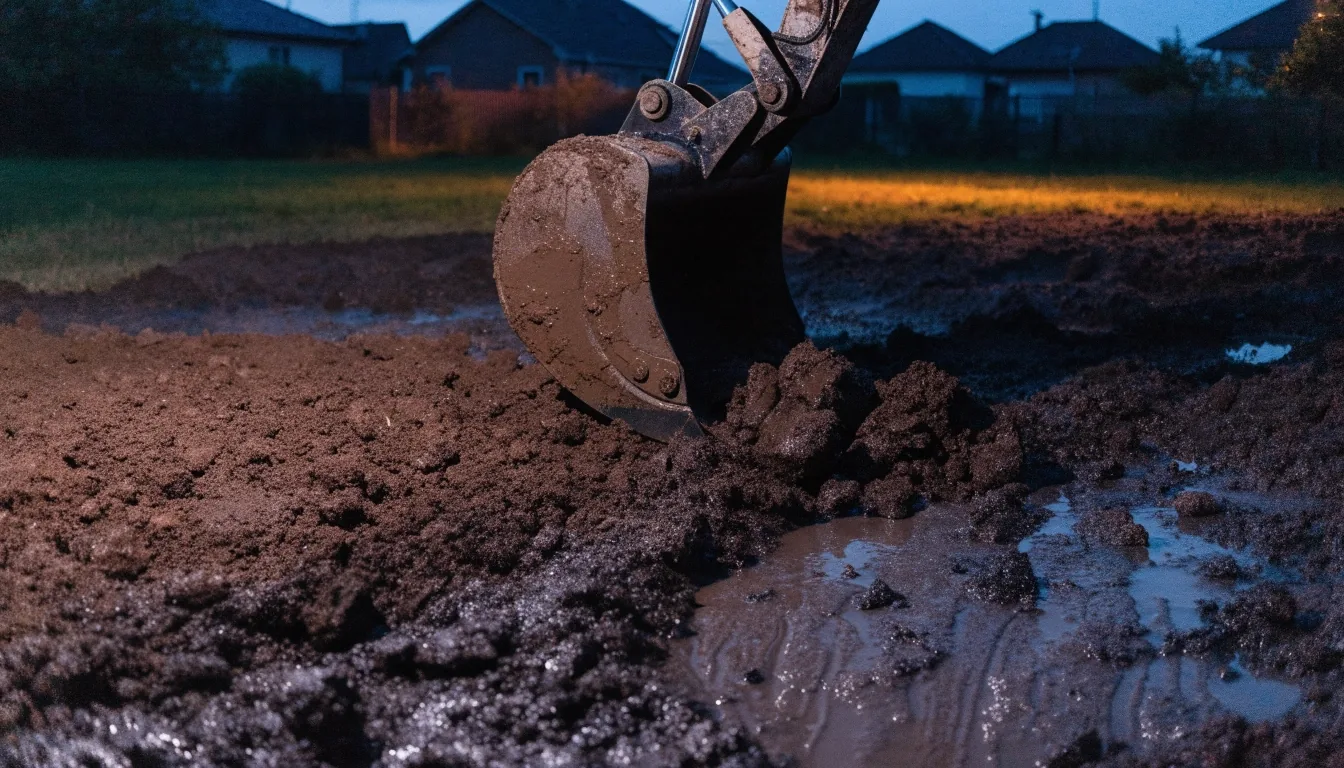
There are a few clear signals. Water sits on the plot after rain, or runs toward the building instead of away from it. The ground is compacted fill left by earlier construction, or the levels simply do not suit how the space will be used.
Sometimes a garden is being built on a plot that has never been properly prepared, and planting straight into it wastes the plants. In each case, the fix is ground preparation before anything else goes in.
Water that will not leave
Pools that stay after rain, or a fall that pushes surface water back at the house, are the most common reason people call us.
Compacted fill
Ground left tight by earlier building work sheds water and suffocates roots. It needs breaking up before planting or paving.
Levels that do not fit
A terrace, a lawn or a parking spot each need a different fall and height. We set the levels to how you will actually use the plot.
New ground, never prepared
On a bare plot, soil structure, depth and drainage are set once. Getting them right here saves rework under the lawn later.
Cutting, filling and setting levels
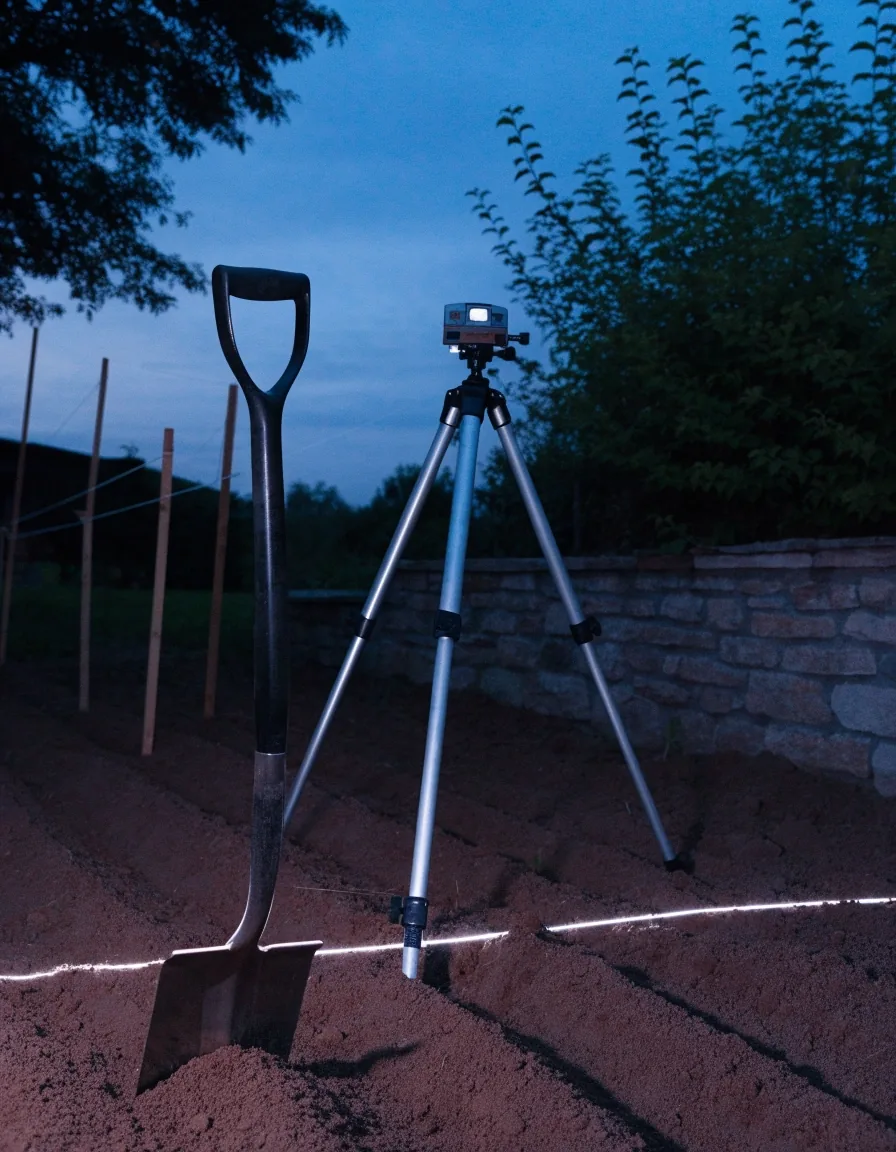
Tereprendezés starts with moving material to reach design levels. That means cutting where ground is too high, filling where it is too low, and shaping falls so water moves away from structures.
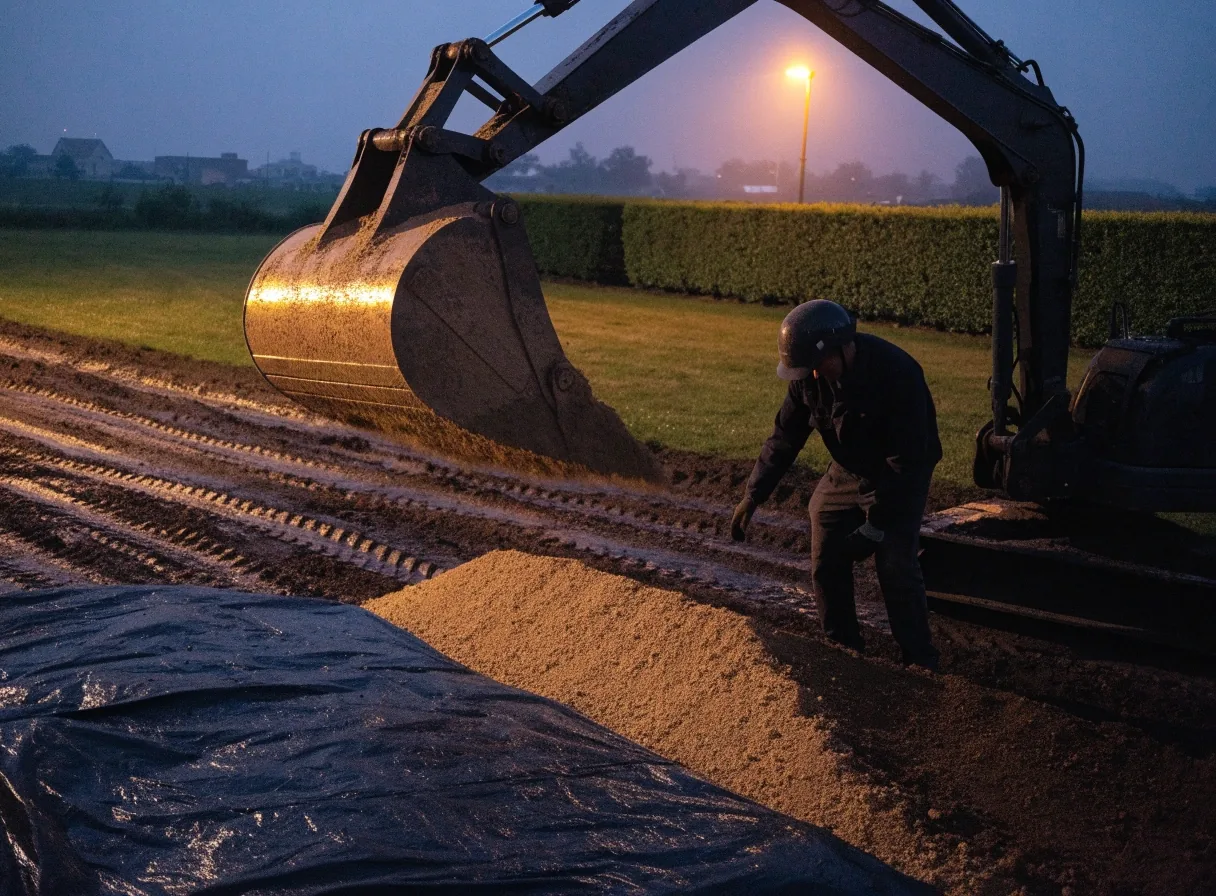
Topsoil is stripped and stockpiled separately so it can go back on finished surfaces rather than being buried. On larger plots this is done with machinery sized to the access available, which is often the deciding factor in how the work is planned.
- Topsoil kept separate
- Stripped first and stockpiled on site, so the living layer returns to the surface where it is needed.
- Falls away from the building
- Gradients are shaped toward a discharge point, not left flat against the wall.
- Machinery matched to access
- A machine that fits the gate and can turn on site does the work faster than hand labour.
- Cut and fill balanced
- Where ground allows, material moved from one part of the plot is reused elsewhere instead of hauled away.
Drainage and water management
Standing water is the most common ground problem we are called about. Solutions range from regrading a surface to installing French drains or a connection to an existing system, depending on where the water comes from and where it can go.
On sites with heavy clay, drainage design matters more than on lighter ground, because water moves through it very slowly. Getting this wrong shows up as dead patches in lawn or cracked paving a season or two later.
Garden and green-space maintenanceRegrading the surface
Where water only needs a direction to travel, changing the fall of the ground is often enough, with no buried pipe at all.
French drains
A gravel-filled trench with a perforated pipe collects water below the surface and carries it to a discharge point. Suited to damp lawns and planting beds.
Connecting to existing systems
Where a storm connection or soakaway already exists, we work out whether it can take the flow and route the new drainage to it.
Heavy clay ground
Clay holds water and drains slowly. On this ground the drainage plan is drawn before levels are finalised, because the two depend on each other.
Soil improvement and preparation for planting
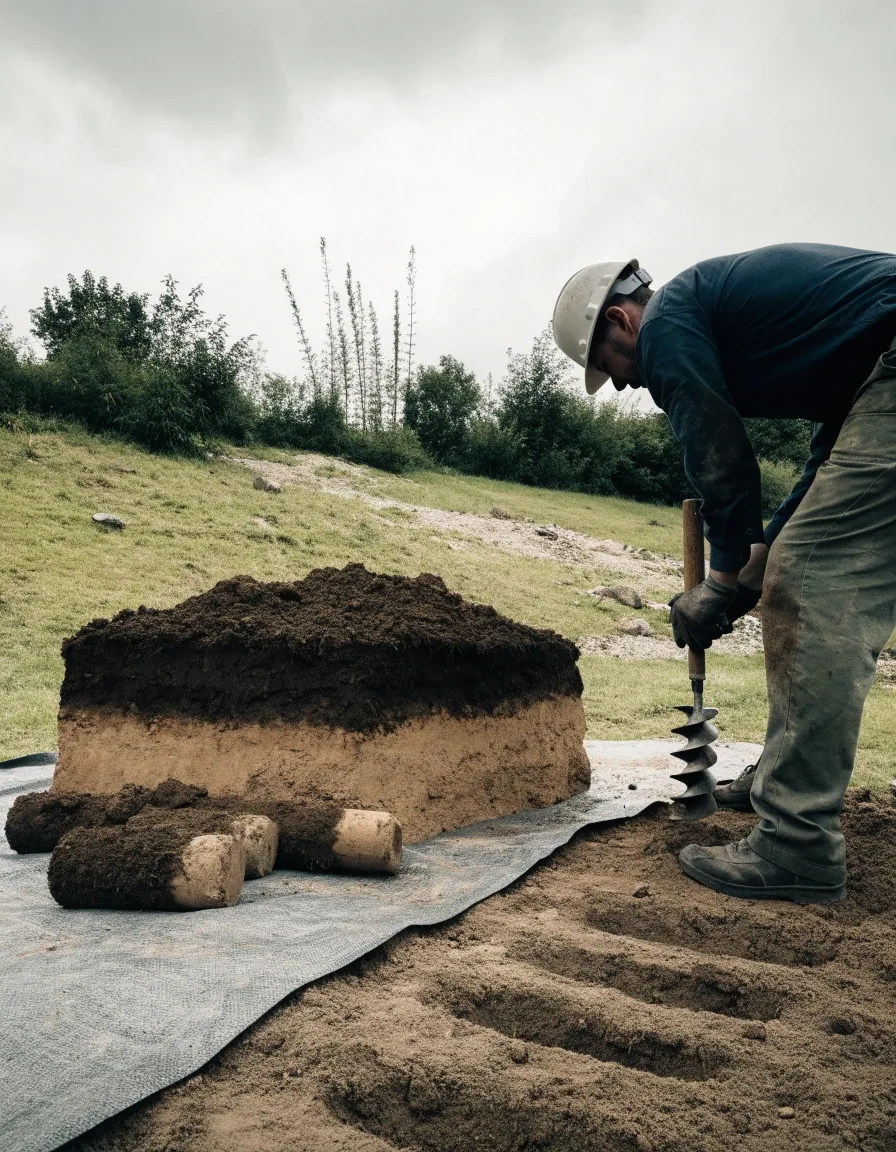
Talajmunka is not only about levels. Compacted ground is broken up, and heavy clay is amended so roots can establish and water can drain. Where topsoil has been lost or is too thin, it is supplemented before planting beds or lawn are created. The aim is a soil profile that supports what will grow in it, which is why this stage is planned together with the planting rather than treated as separate.
Breaking up compacted ground
Ground that has been driven over or built on is opened up to depth, so roots and water can move through it again.
Amending heavy clay
Clay is worked with organic material and grit so it crumbles rather than sets hard in summer and waterlogs in winter.
Replacing lost topsoil
Where the living layer is missing or too thin to grow in, it is brought back to the depth the planting needs.
Prepared for what will grow
Lawn, shrubs and trees ask different things of a soil profile. The preparation follows the planting plan, not a fixed recipe.
Sub-base for paving and structures
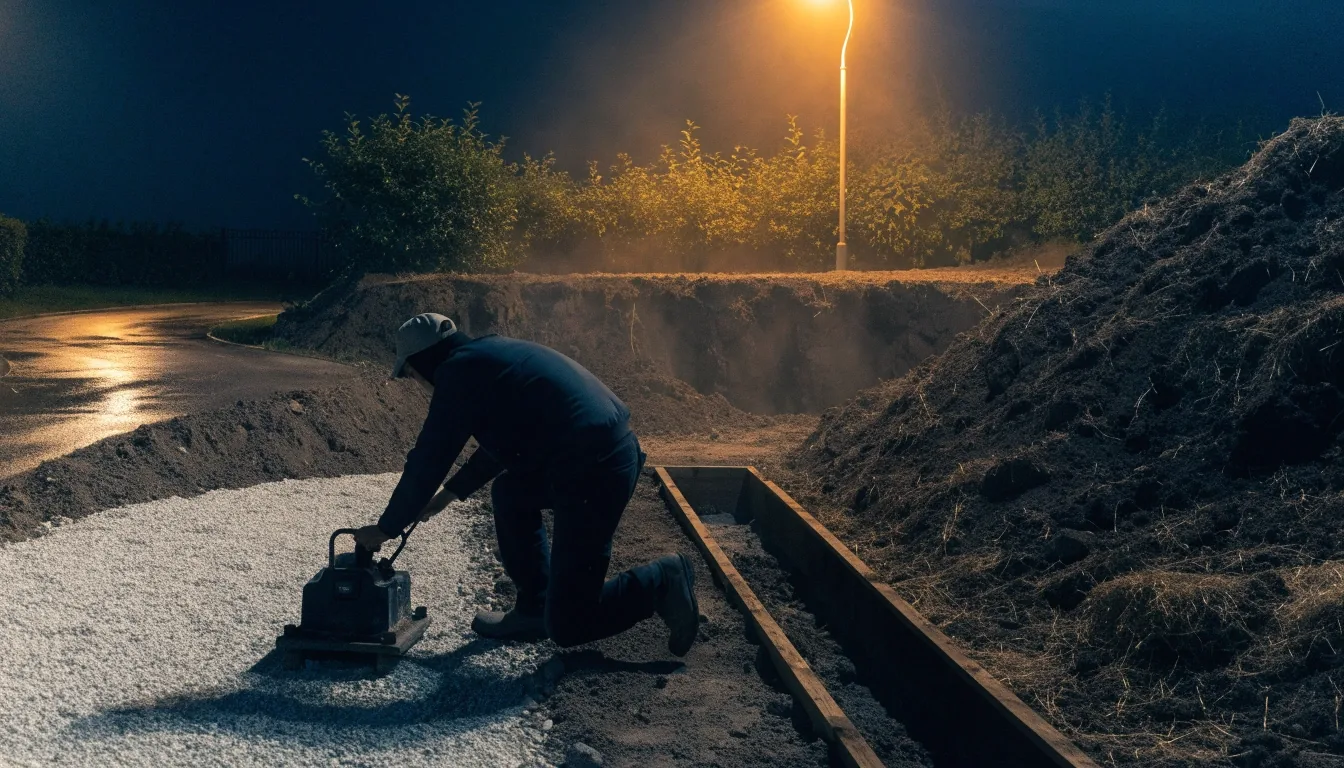
Under paths, patios, driveways and shed bases, the sub-base does the structural work. It is laid in layers and compacted to the right depth for the surface above and the loads it will carry.
A domestic path and a driveway used by vehicles need very different preparation. Skipping compaction or using the wrong material is a common shortcut that shows up as settlement and uneven surfaces within a couple of seasons.
Footpaths and garden paths
Prepared for foot traffic only, with a shallow compacted base and a fall that sheds water off the surface.
Patios and terraces
A deeper base carries the paving plus furniture, planters and occasional foot traffic without settling out of level.
Driveways taking vehicles
Vehicle loads need more depth and better compaction than a path. This is where cutting corners costs the most later.
Shed and outbuilding bases
A level, well-compacted pad keeps a timber or metal structure square and stops it moving as the ground shifts.
We set the base depth from what the surface will carry and what the ground below can support. Where the subsoil is soft or variable, that is found out at the survey stage rather than after the paving is down.
Working on construction sites
On building projects, earthworks have to fit around other trades. Access routes, spoil storage and the order of work are agreed in advance so that ground preparation does not block deliveries or damage finished surfaces.
Excavated material may be reused on site or removed, which affects both cost and the number of vehicle movements. Clear sequencing is what keeps this stage from delaying everything after it.
Discuss groundworksOn site now
Ground preparation on a live building plot
Sequencing agreed with the main contractor before the first machine arrives: where spoil is stacked, which route vehicles take, and which finished surfaces are protected.
Equipment and site access
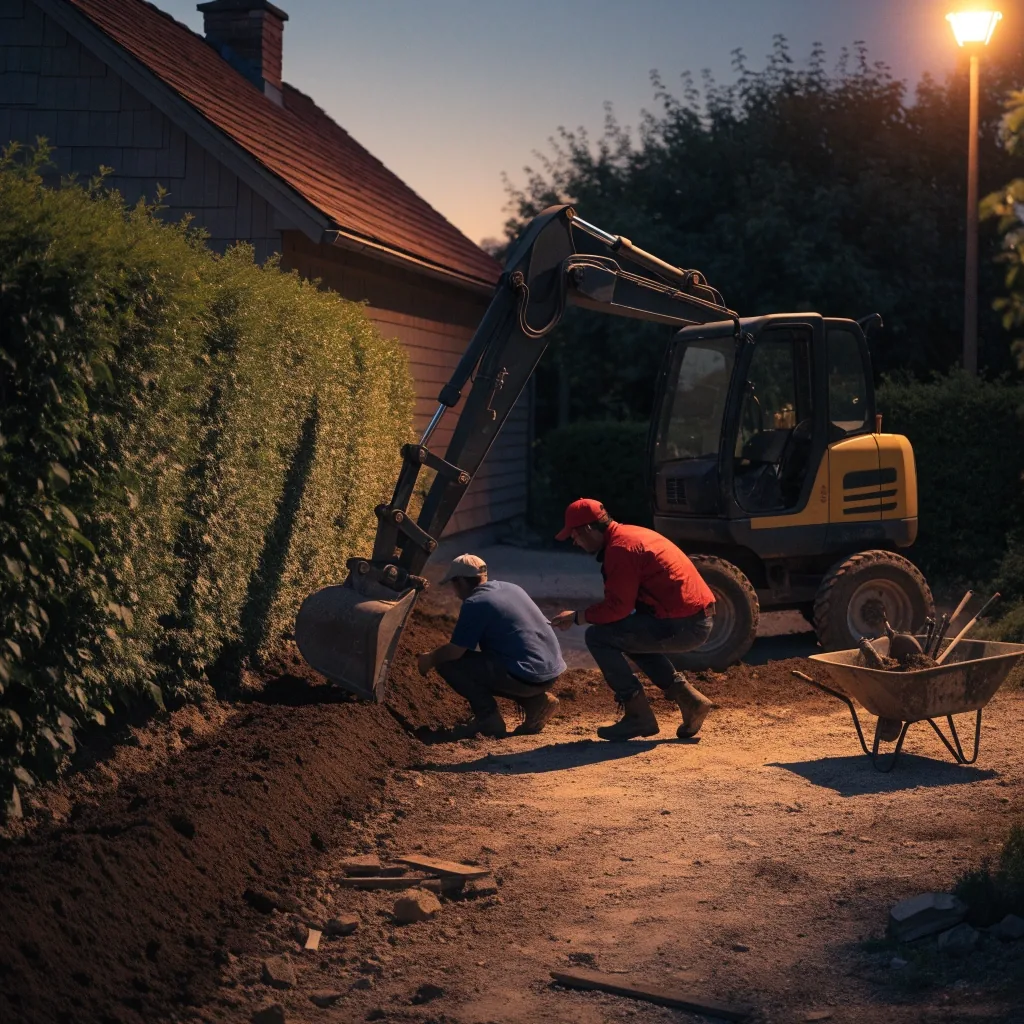
The machinery used depends on what can reach the site. A compact excavator fits through a standard gate and works in a back garden; larger plant needs wider access and space to turn. Where access is tight, more of the work is done by hand, which changes the timeline.
This is one of the first things we check on a site visit, because it affects both the plan and how long the job takes.
Compact excavator
Passes a standard gate. Suits back gardens, tight courtyards and plots with no side access.
Larger plant
Needs a wider entrance and turning space. Moves bulk material faster on open plots.
Hand work where needed
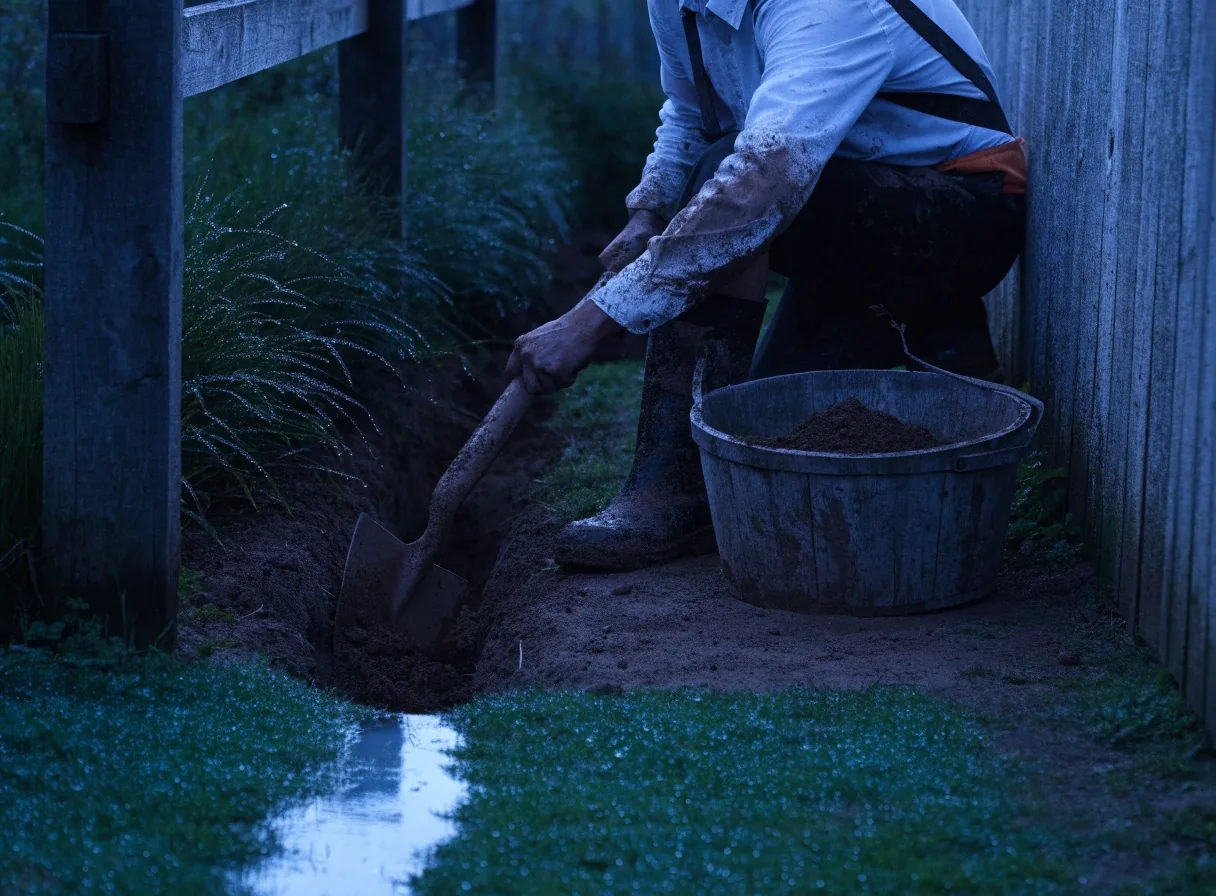
In tight spots, digging and moving are done by hand. Slower, but it protects walls, roots and finished surfaces.
After the ground is ready
Once levels, drainage and soil are in order, the site is ready for whatever comes next: lawn, planting, paving or construction. Ground left exposed needs protecting from traffic and weather until that next stage begins, especially where topsoil has been placed.
We agree at handover what will follow and when, so the preparation is not undone by vehicles crossing finished ground.
Protect finished ground
Placed topsoil and prepared beds are kept off the vehicle route until planting begins.
Agree the next stage
Handover covers what follows and roughly when, so the ground is not left exposed longer than needed.
Talk through your ground
Tell us what the plot does after rain and how you want to use it. A site visit is the point where access, levels and drainage get checked together, and you get a clear scope before any machine arrives.
Győr · Szent Imre út 112
Monday to Friday, 8:00 AM – 5:00 PM. Saturday, 9:00 AM – 1:00 PM.
Contact us to arrange a visit.
Questions we are asked about groundworks
How do I know if my plot needs earthworks? Answer
The clearest signs are water that sits or runs the wrong way after rain, ground that has been compacted by earlier building work, and levels that do not suit how you want to use the space. If planting is planned on a plot that has never been prepared, it is worth checking the soil before buying plants.
Can you work around an existing garden? Answer
Yes, within limits. Established trees and hedges that are staying are marked and protected, and the route for machinery is planned around them. Where roots are close to the surface or the space is tight, more of the work is done by hand.
Where does excavated soil go? Answer
Where the levels allow, clean subsoil is reused on site to build up low areas, and topsoil goes back on finished surfaces. Material that cannot be reused is taken away. The balance between the two affects both cost and how many vehicle movements the job needs, so it is worked out before work starts.
Can earthworks be done in winter? Answer
It can, but wet and frozen ground changes what is practical. Heavy rain makes access and compaction harder, and frozen soil cannot be compacted properly. Where timing is flexible, we plan around the conditions rather than fighting them, and say so at the survey stage.
What do you need from me before a site visit? Answer
A rough idea of how you want to use the space, anything you know about earlier building work on the plot, and clear access for the visit. If there are plans or a survey from another trade, bring them along; they often answer level and drainage questions before we start.
Ground first, then everything else
Tereprendezés, talajmunka and drainage are the quiet stages that decide how the rest of a garden or building plot performs. Zöld Liget works in Győr and across Hungary on gardens, parks and construction plots. Tell us what the ground is doing now, and we will tell you what it needs.