
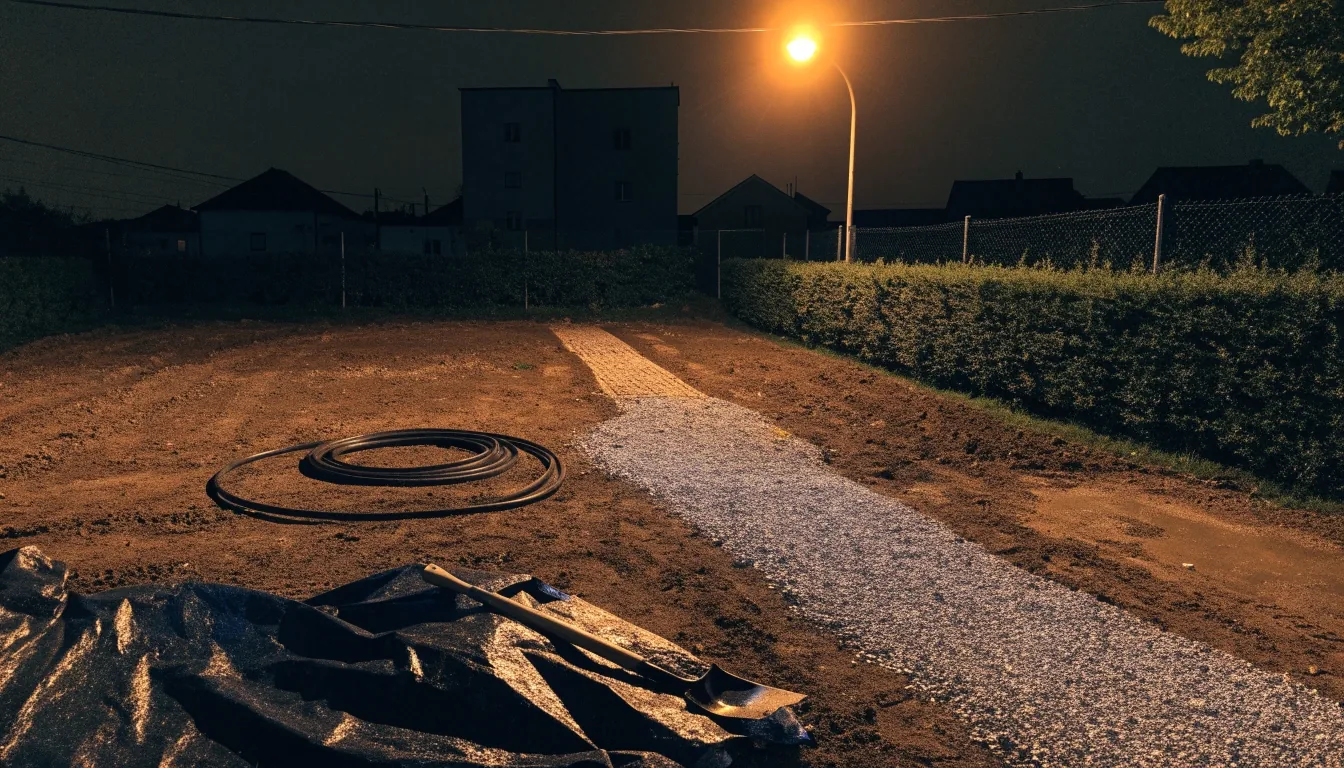
Győr · design & build
Garden design and build from survey to planting
A garden build is a sequence of decisions, and the order saves money. Here is how a project moves from the first site survey through groundworks and hard landscaping to planting — and what you need to decide along the way.
Build sequence
- Site survey and levels
- Plan, levels and routes
- Groundworks and soil
- Hard landscaping and edges
- Planting and handover
Who this page is for
A realistic build, planned before the first spade
This page is written for homeowners in Győr and the surrounding area, and for anyone preparing a larger plot for construction or public use. It explains how a garden project actually moves — survey, plan, groundworks, hard landscaping, irrigation, planting — and what you need to decide at each point so the build does not stall halfway.
If you already have a designer's drawings, we build to them and flag anything on site the drawings did not account for. If there is no design yet, we propose one based on what the survey finds and how you want to use the garden.
The site survey comes first
Before any design work
We walk the site and record what is actually there before anything is drawn. The survey is not a formality — it is where most of the real constraints show up, and it decides what the build can realistically include.
-
Slope and drainage
How the ground falls, where water currently sits after rain, and which direction falls need to run so water moves away from the house rather than toward it.
-
Existing trees worth keeping
Root spread, canopy shade and the condition of each tree — a healthy tree changes the whole planting plan and the route of any excavation nearby.
-
Sun exposure through the day
Which beds sit in shade by mid-afternoon, where the terrace actually gets evening light, and how that changes between spring and late summer.
-
Soil depth and type
Around Győr, ground can shift from heavy clay to lighter sandy soil within a short distance. The planting plan changes with it, and so does the amendment work the soil needs.
-
Underground service routes
Where water, gas, electricity and drainage run across the plot, so excavation and planting do not cut into something that was never on the drawing.
-
Machine access to the back garden
Whether a mini-excavator can reach the work area decides how groundworks are done and how much has to be moved by hand instead.
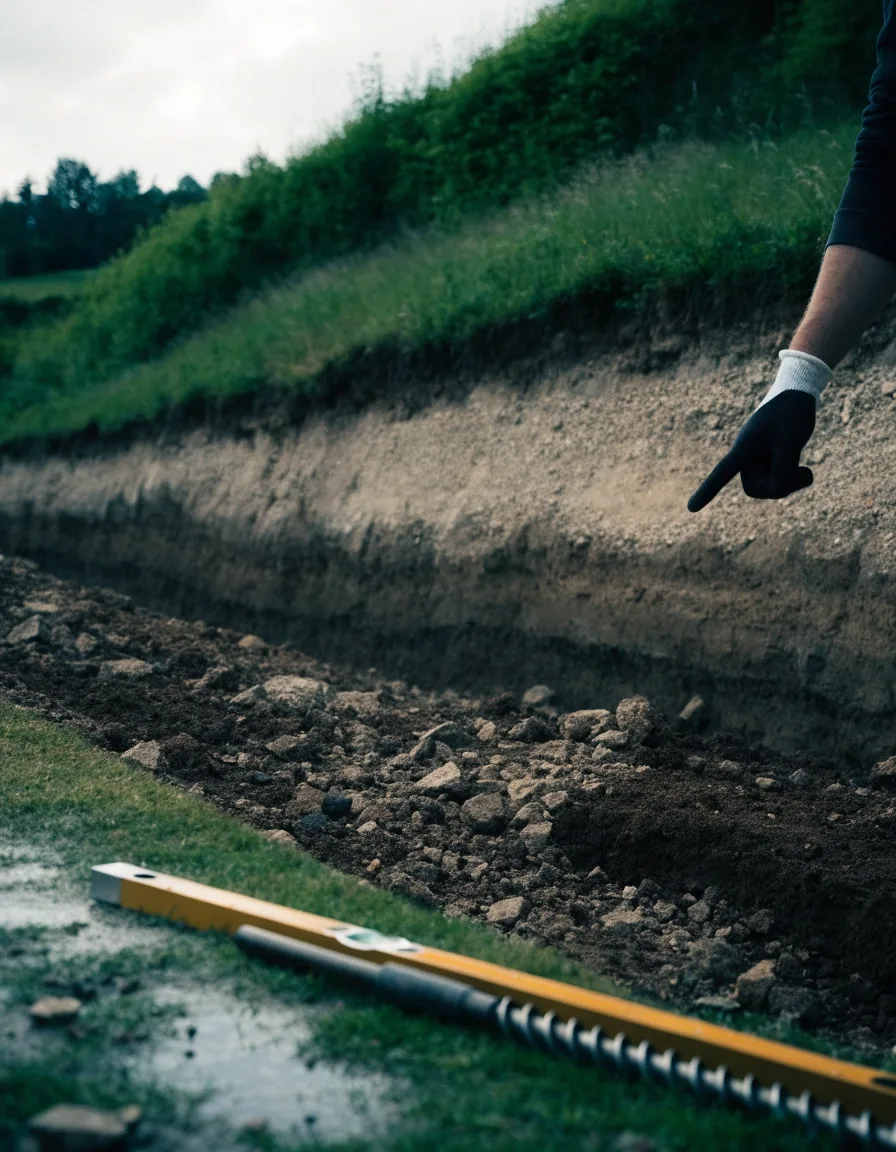
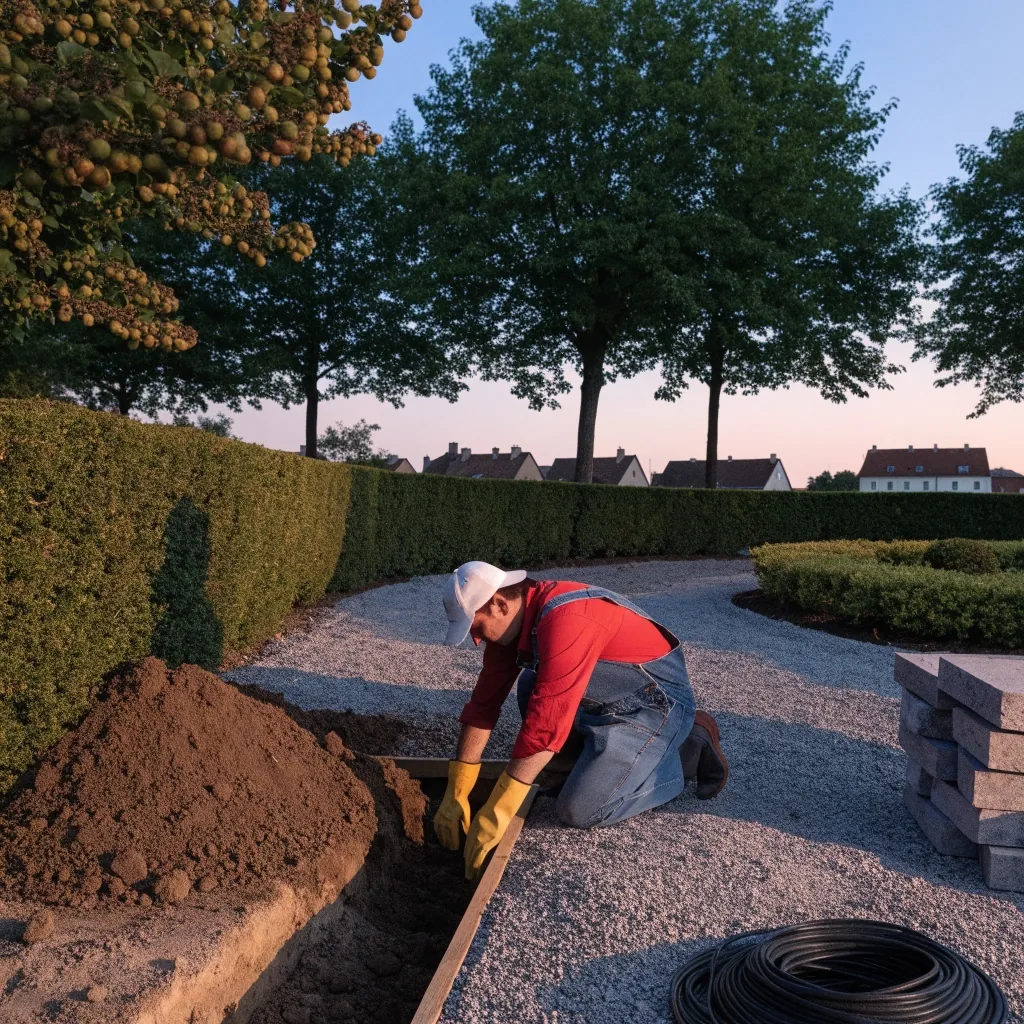
Groundworks and levels, mid-build
Order of work: drainage → levels → sub-base → surfaces
Nothing above ground performs well if the layers underneath are wrong. That is why drainage, levels and sub-base are settled before paving, edging or planting starts anywhere on site.
Turning the survey into a plan
The plan sets out levels, surfaces, planting areas, and the position of any irrigation, lighting or drainage. It also sets a realistic order of work, because some tasks have to happen before others — drainage before paving, irrigation before planting, levels before everything.
Where a client already has a designer's drawings, we build to them and flag anything on site that the drawings did not account for. Where there is no design yet, we propose one based on the survey and how you want to use the garden.
Groundworks and soil preparation
Talajmunka is the stage that decides how well everything above it performs. It includes stripping and stockpiling topsoil, cutting and filling to reach design levels, shaping falls away from the house, and installing drainage where water would otherwise sit.
Compacted fill and heavy clay are broken up and amended, because roots will not establish in ground that has been driven over by machinery. Sub-base is laid and compacted under paving and paths. Skipping or rushing this stage is the most common reason a garden fails a few seasons later.
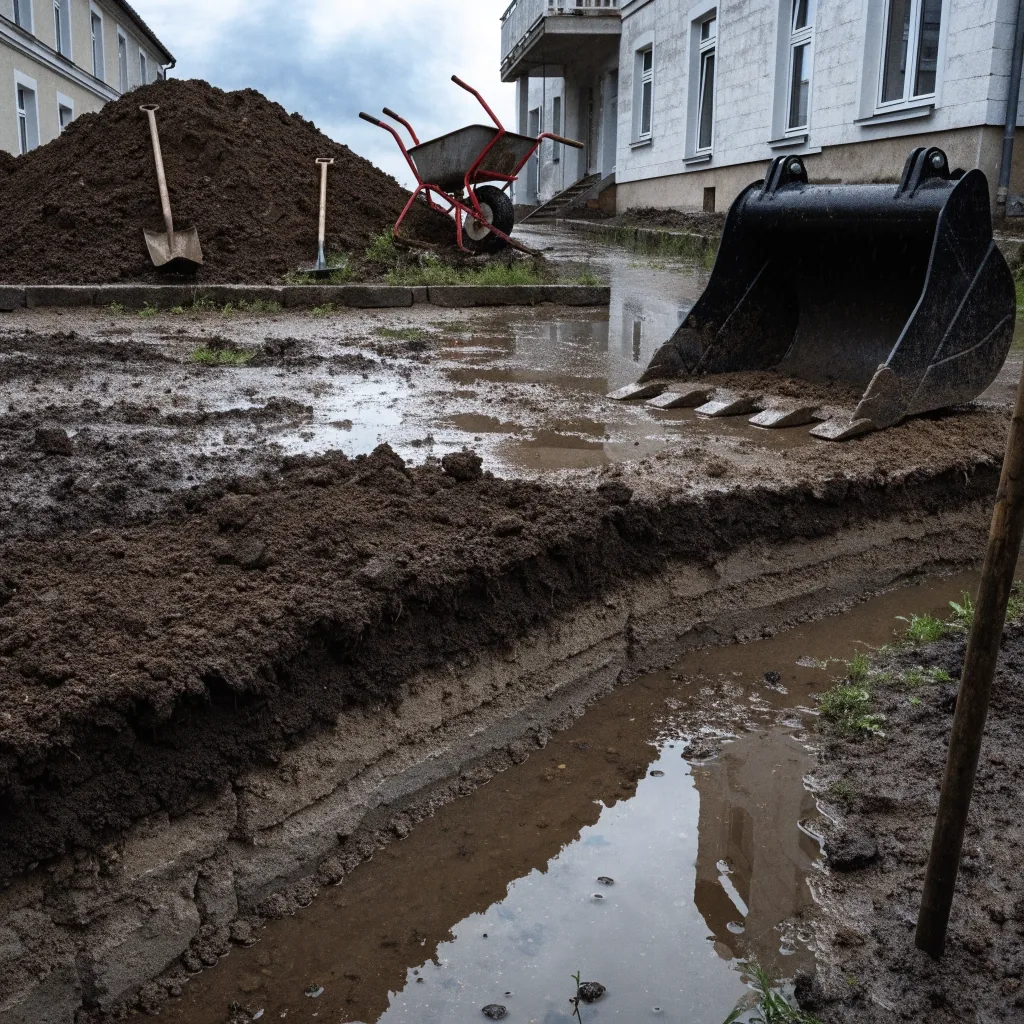
Topsoil is stripped and stockpiled on site so the good material goes back on top of the finished levels rather than being hauled away.
Where most projects get stuck
Irrigation planned into the build, not bolted on after
Before paving is laid
An öntözőrendszer is far easier and cheaper to install while the ground is open than after paving is down. Planning it at design stage means pipe runs follow the layout, valves sit somewhere accessible, and zones match the planting they serve.
Irrigation design and commissioning
Design depends on water pressure and flow at the property, and on which areas need separate control — lawn, beds and containers rarely want the same schedule.
Zone control
Lawn, beds and containers run on separate schedules.
Accessible valves
Valve boxes sit where they can be reached for service, not buried under a patio.
Commissioning
After installation, coverage is checked and the controller is set before handover.
Hard landscaping: the structure of the garden
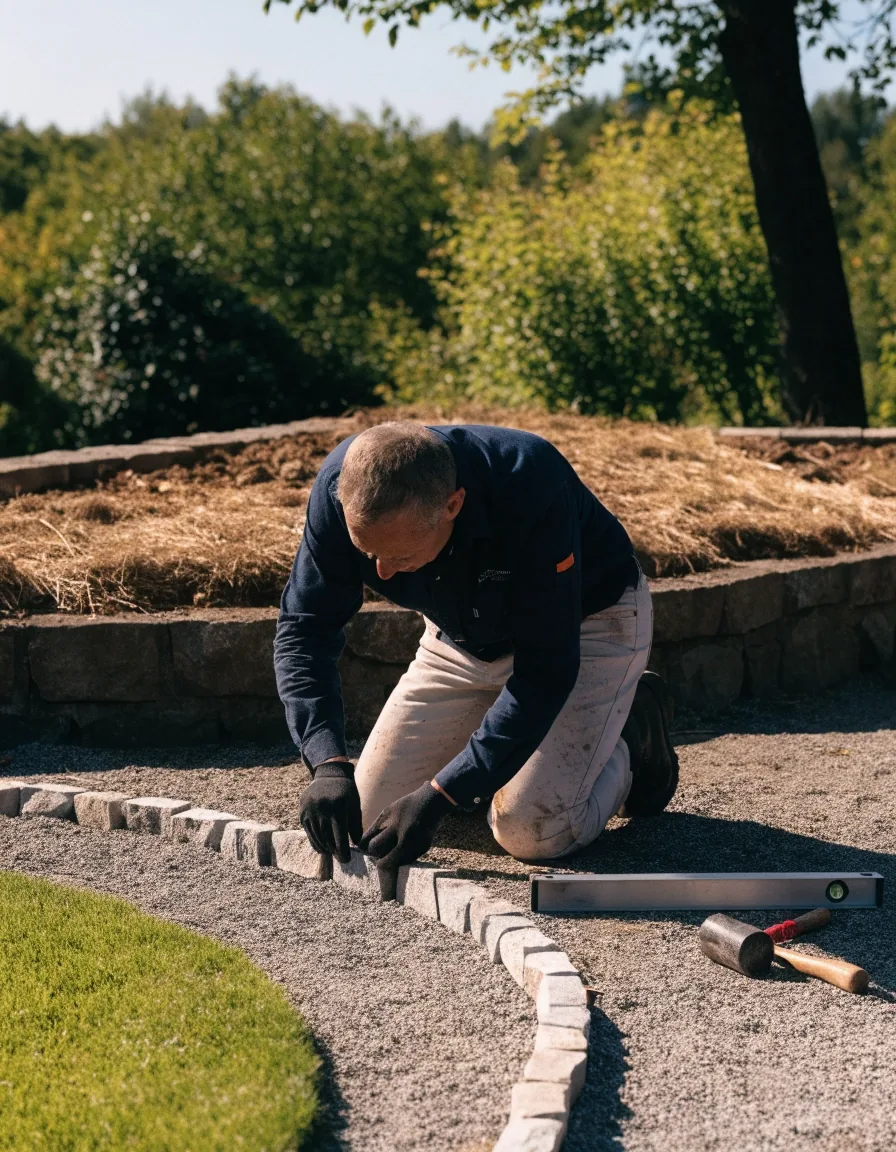
Paths, patios, edging, retaining walls, steps and fence lines make up the structure of a garden. They are built after levels and drainage are settled, and their materials need to suit the site — frost movement, drainage and how the surface will be used all affect the choice.
-
Sub-base first
Paths and patios
Surfaces chosen for how they drain and how they wear under frost, not only for colour.
-
Runs with paving
Edging and borders
A clean, straight edge is what makes a finished garden read as finished, and it protects the paving edge from creeping soil.
-
Engineered, not guessed
Retaining walls on slopes
Where a slope is involved, retaining structures manage the change in level rather than simply hold back soil.
-
Built to levels
Steps and level changes
Rise and tread set for how the garden is actually walked, with drainage falling away from the riser.
-
Last of the structure
Fence lines and boundaries
Set out with the levels so a fence follows the garden's shape rather than cutting across it.
Planting and establishment
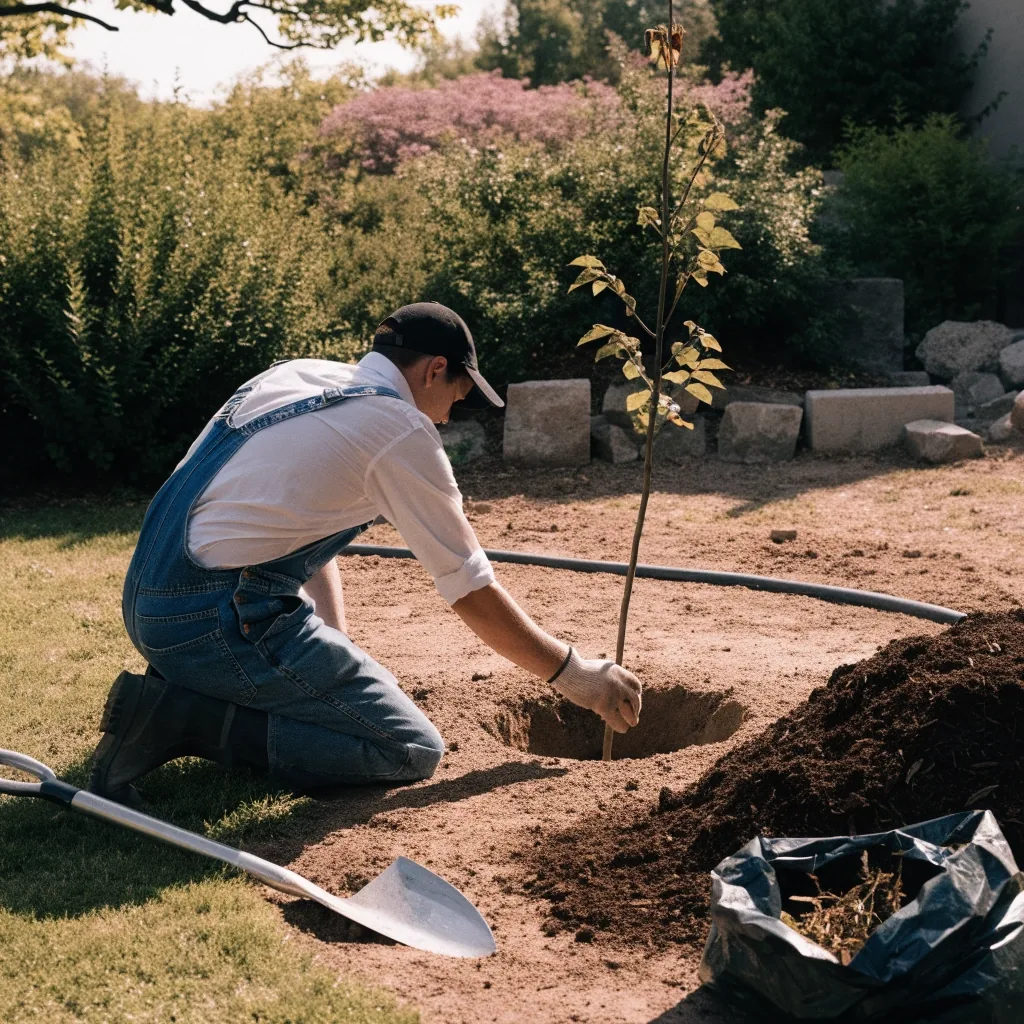
Planting follows the season, not the construction schedule. Trees and shrubs generally go in during spring or autumn, while some species have narrower windows. Selection is based on the site's light, soil and exposure, and on how much maintenance the owner wants afterwards.
Newly planted material needs watering through its first establishment period, which is where a functioning irrigation system pays for itself. We also agree what happens to any existing plants that were kept in the plan.
Timelines and what affects them
A small garden build can run a few weeks; larger projects with significant groundworks or hard landscaping take longer. Weather is the main variable: frozen or waterlogged ground stops earthworks, and planting cannot be forced into the wrong season.
Availability of materials and the need to coordinate with other trades on a construction site add time as well. We give a sequence with the quote, so you know which stages depend on conditions and which are fixed.
- Frozen or waterlogged ground Stops earthworks
- Planting window Spring or autumn
- Material availability Can shift dates
- Coordination with other trades Construction sites
Handover and aftercare
At handover you get a garden that is planted, watered, and clear of construction waste. We explain how the irrigation controller works, when the next seasonal tasks fall due, and what the new planting needs in its first year.
From there, clients either take the work on themselves or move to a maintenance arrangement with us. Both are fine, but a newly built garden does need attention in its first season, and it is better to plan for that than to discover it in July.
Where to reach us
Zöld Liget Kertépítés és Parkfenntartás
Szent Imre út 112, 9026 Győr, Hungary
Monday to Friday 8:00 AM – 5:00 PM · Saturday 9:00 AM – 1:00 PM
Phone +36 1 253 1813 · Email [email protected]
Questions clients ask before starting
Can we start if we only have a rough idea?
Yes. That is exactly what the survey is for. We walk the site, record the constraints, and propose a design based on what the ground allows and how you want to use the garden. You do not need finished drawings to get started.
We already have a designer's drawings — can you build to them?
We can. We build to the drawings and flag anything on site that they did not account for — an underground service, a change in soil, an access limit — before it becomes a problem during the build.
Should irrigation go in during the build or afterwards?
During the build. Pipe runs, valve positions and zones are much easier and cheaper to install while the ground is open. Retrofitting under finished paving is possible but costs more and disturbs the surfaces.
How long does a garden build actually take?
A small build can run a few weeks. Larger projects with significant groundworks or hard landscaping take longer, and weather is the main variable. The quote includes a sequence so you know which stages depend on conditions and which are fixed.
Do you work outside Győr?
Yes. We work in Győr and across Hungary. Travel and access affect scheduling, so it is worth mentioning the location when you get in touch so we can plan realistically.
Can you also maintain the garden once it is built?
Yes. Some clients take the work on themselves after handover and some move to a maintenance arrangement with us. A newly built garden does need attention in its first season either way.
Ready to plan your garden build?
Start with a site survey. From there you get a plan, a realistic sequence, and a quote you can actually plan around — before any ground is opened.
- All landscaping services The full scope of kertépítés and parkfenntartás we take on in Győr and across Hungary.
- Garden and green-space maintenance Mowing cycles, hedge cuts, seasonal care and green-waste haul-away for built gardens and public green space.
- Built projects Completed gardens and green spaces, with the stages each one went through.
- About Zöld Liget Who we are, how we work, and the company details you may need for a contract.
Your build, stage by stage
- Site survey and constraints recorded
- Design, levels and sequence agreed
- Groundworks, drainage and sub-base
- Hard landscaping and irrigation installed
- Planting, handover and first-season care
Zöld Liget Kertépítés és Parkfenntartás
Szent Imre út 112, 9026 Győr, Hungary · Győr and across Hungary